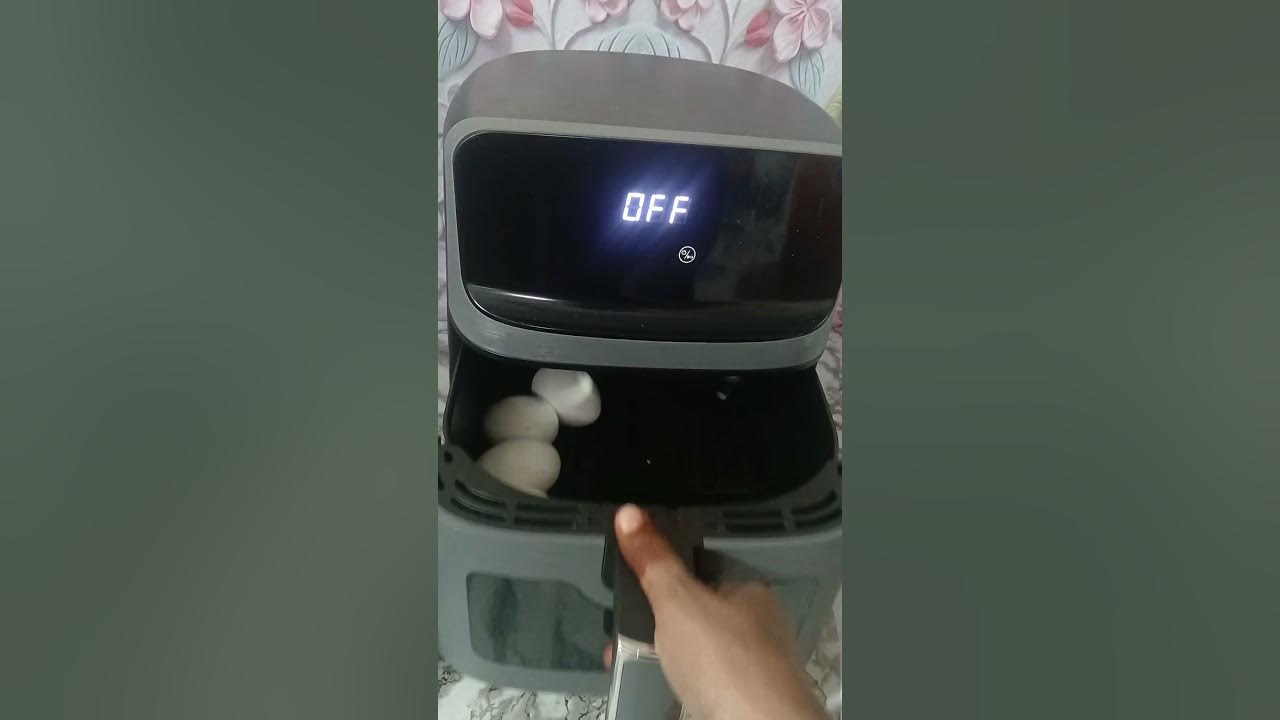
Tired of the age-old ritual of waiting for water to boil, wrestling with a steamy pot, and then crossing your fingers for the perfect egg doneness? Enter the air fryer, revolutionizing how we prepare our beloved "boiled" eggs. Imagine achieving consistently perfect hard or runny soft yolks, all without a single drop of water. This innovative method is not just a time-saver; it’s a game-changer for anyone seeking convenience, consistency, and culinary precision in their kitchen.
The air fryer offers an unparalleled level of control, delivering evenly cooked eggs every time. Whether you're craving a rich, jammy yolk for your avocado toast or a firm, creamy center for deviled eggs, the air fryer simplifies the process significantly. Say goodbye to guesswork and hello to reliably delicious air fryer boiled eggs – truly a modern kitchen marvel.
Why Air Fryer Boiled Eggs are a Game Changer
The traditional stovetop method for "boiled" eggs, while classic, often comes with a host of frustrations: water spilling, pots to scrub, and the eternal question of whether the yolk will be perfectly set or tragically under/overcooked. The air fryer sweeps these issues aside, offering a superior alternative that has home cooks raving.
Ditch the Pot, Embrace Consistency
One of the most appealing aspects of making air fryer boiled eggs is the complete elimination of boiling water. This means no heavy pots to haul, no splatters on your stovetop, and no waiting for water to reach a rolling boil. The air fryer utilizes convection heat, circulating hot air around the eggs, which cooks them gently and evenly from all sides. This consistent heat distribution is key to preventing the dreaded green ring often seen in overcooked traditional hard-boiled eggs, ensuring a beautifully uniform yolk every single time.
For those who love a runny yolk, the air fryer is a revelation. Achieving that delicate balance of a fully set white and a perfectly dippy, warm yolk can be a struggle on the stove. With the air fryer, however, the results are remarkably consistent, making it easier than ever to enjoy your eggs just the way you like them. The uniform heating also aids in easier peeling, as the gentle cooking process often prevents the shell membrane from adhering too tightly to the egg white.
The Science Behind "Boiling" Eggs Without Water
While we colloquially call them "boiled" eggs, the air fryer method is actually a form of baking or roasting. The hot, circulating air in the air fryer basket cooks the eggs by denaturing the proteins in both the white and the yolk. Unlike water, which transfers heat very rapidly and can sometimes lead to uneven cooking if not carefully managed, the air fryer's dry heat provides a more controlled and consistent environment. This allows the egg to cook through without being shocked by sudden temperature changes, resulting in a more tender texture and predictable doneness. It’s an ingenious way to harness modern kitchen technology for an age-old staple.
Mastering Air Fryer Hard-Boiled Eggs
For many, a perfectly hard-boiled egg is a kitchen essential, forming the base for countless dishes from deviled eggs to chef salads. The air fryer elevates this staple, delivering results that are consistently superior to the stovetop method.
Achieving That Perfect, Creamy Yolk
The hallmark of an expertly cooked hard-boiled egg is a vibrant, creamy yellow yolk, free from any greenish discoloration. This undesirable green ring, often caused by overcooking, is a reaction between iron in the yolk and sulfur in the white. The air fryer's precise temperature control and even heat circulation significantly reduce the likelihood of overcooking, ensuring your yolks are always beautifully golden and velvety smooth. This makes them ideal for intricate recipes where presentation matters, or simply for enjoying plain as a nutritious snack. For more insights on achieving ideal doneness, explore our article on Air Fryer Boiled Eggs: Get Perfect Yolks & Ideal Doneness.
Step-by-Step for Hard-Cooked Perfection
Making air fryer hard-boiled eggs is incredibly straightforward. Here’s how to get it right:
- Preheat Your Air Fryer: Set your air fryer to 250-275°F (120-135°C). Preheating ensures a consistent cooking temperature from the moment the eggs enter the basket.
- Place the Eggs: Gently place your eggs in a single layer in the air fryer basket. Avoid overcrowding, as this can impede air circulation and lead to uneven cooking. Eggs can be taken straight from the fridge for hard-boiling, as their colder temperature slightly extends cooking time, helping to prevent overcooking.
- Cook to Desired Firmness:
- For a firm but still slightly creamy yolk: Cook for 14-15 minutes at 275°F (135°C).
- For a fully firm, classic hard-boiled yolk: Cook for 16-17 minutes at 275°F (135°C).
- If using a lower temperature like 250°F (120°C), you might need an extra minute or two.
- Prepare an Ice Bath: While the eggs are cooking, fill a medium bowl with cold water and plenty of ice cubes. This step is crucial for stopping the cooking process immediately and for facilitating easy peeling.
- Transfer to Ice Bath: As soon as the cooking time is up, use kitchen tongs to carefully transfer the hot eggs directly into the prepared ice bath. Let them cool for at least 10 minutes.
- Peel and Serve/Store: Once cooled, gently tap the eggs on a hard surface to crack the shell. Starting from the wider end, where the air pocket typically forms, the shell should peel away with ease. For stubborn pieces, peeling under cool running water can help. Serve immediately or store in the refrigerator for up to a week.
Crafting the Ideal Air Fryer Soft-Boiled Eggs
For many epicureans, the soft-boiled egg is the epitome of breakfast luxury – a warm, runny yolk ready to mingle with toast soldiers or elevate a bowl of ramen. The air fryer takes the unpredictability out of achieving this delicate balance.
Runny Yolks, Firm Whites – Every Time
The quest for the perfect soft-boiled egg often ends in frustration on the stovetop, with either an undercooked white or an overly firm yolk. The air fryer, however, consistently delivers eggs with beautifully set, tender whites and lusciously runny, warm yolks. This consistency makes it incredibly easy to enjoy a high-protein breakfast or to incorporate perfectly dippy eggs into your meal prep without the usual culinary anxiety. This method truly offers a quick and clean way to get Quick Air Fryer Boiled Eggs: No Pot, No Waiting for Water.
Your Guide to Dippy Egg Bliss
Achieving a consistent runny yolk requires a bit more precision, particularly concerning egg temperature and air fryer settings. Here's your guide:
- Egg Temperature Matters: For the most consistent results with soft-boiled eggs, use large eggs that are at room temperature. This allows for more even cooking compared to cold eggs, preventing the white from being undercooked while the yolk reaches its desired runniness.
- Preheat with Precision: Preheat your air fryer to a slightly lower temperature for soft-boiled eggs, ideally 275°F (135°C). If your air fryer doesn't go below 300°F (150°C), you can still achieve great results by adjusting the cooking time downwards.
- Air Fry for Softness: Place eggs in a single layer in the preheated air fryer basket, ensuring they do not overlap. The cooking time will vary based on your air fryer model, egg temperature, and desired yolk consistency.
- At 275°F (135°C):
- 8-9 minutes: Dippy eggs with a very runny yolk and slightly set white.
- 9-11 minutes: Runny yolk with a firmer, more fully set white.
- At 300°F (150°C) (reduce time by 1-2 minutes compared to 275°F settings):
- 7-8 minutes: Very runny yolk, slightly set white.
- 8-9 minutes: Runny yolk with firm white.
Always consider your personal preference and your specific air fryer. A quick test batch can help you pinpoint your ideal time.
- At 275°F (135°C):
- The Essential Ice Bath: Immediately after cooking, use tongs to transfer the eggs to an ice bath (bowl filled with half cold water, half ice cubes). Let them cool for at least 10 minutes. For soft-boiled eggs, the ice bath is even more critical than for hard-boiled, as it instantly halts the cooking process, preserving that perfect runny yolk.
- Gentle Peeling: Soft-boiled eggs are more delicate. Tap gently to crack the shell, then carefully peel under cool running water. Start from the wider end and handle with care to avoid damaging the delicate white. Serve immediately.
Essential Tips for Air Fryer Egg Success
While the air fryer method is remarkably forgiving, a few key considerations will ensure perfect air fryer boiled eggs every time, whether you prefer them hard or soft.
Temperature and Time are Your Allies
- Egg Temperature: As noted, room temperature eggs are highly recommended for soft-boiled results to achieve optimal consistency. For hard-boiled eggs, straight-from-the-fridge eggs often work well, as the slightly longer cooking time helps prevent overcooking and can sometimes aid in easier peeling.
- Air Fryer Variations: Not all air fryers are created equal. Different brands and models can have slight variations in actual temperature and air circulation. It's always a good idea to perform a test batch to fine-tune the cooking times for your specific appliance and preferred doneness. Keep a log of your successful times and temperatures!
- Egg Size: The cooking times provided are generally for large eggs. If you are using medium, jumbo, or extra-large eggs, you may need to adjust the cooking time by 1-2 minutes. Smaller eggs will cook faster, larger eggs slower.
The Magic of the Ice Bath
The ice bath is non-negotiable for both hard and soft air fryer boiled eggs. For hard-boiled, it stops the cooking process, preventing the green ring and making peeling significantly easier by causing the egg to contract slightly away from the shell membrane. For soft-boiled eggs, it's paramount for stopping the carry-over cooking, ensuring your yolk remains perfectly runny and doesn't firm up after removal from the air fryer. Always ensure your ice bath is truly cold, with plenty of ice.
Peeling Made Easy
Even with an ice bath, peeling can sometimes be a challenge. Here are a few tricks:
- Tap and Roll: Gently tap the egg all around on a hard surface to create many small cracks, then roll it between your hands to loosen the shell further.
- Peel Under Water: For particularly stubborn shells, peeling the egg under a stream of cool running water can help wash away small shell fragments and ease the separation of the membrane from the egg white.
- Start at the Wider End: The wider end of the egg usually has an air pocket, making it the easiest place to start peeling.
The air fryer truly transforms the way we approach one of the simplest yet most versatile foods. By eliminating the need for water and providing precise, even heat, it delivers perfectly cooked eggs, whether hard or gloriously runny, every single time. Experiment with times to find your ideal doneness, and embrace the convenience and consistency of this modern cooking method.
